Software Work Is No Longer Scheduled
One of the quiet failures of most engineering organizations right now is that they still think software work needs to be scheduled.
Backlogs, roadmaps, sprint planning, quarterly prioritization: all of that evolved in a world where the truly scarce resource was human time and attention. You had to decide what would not get done, because doing something meant a human spending time on it.
Full Japanese support in an alpha app for internal users in our Tokyo office should have been a project. In a normal engineering organization, that means roadmap time, prioritization, and somebody explaining why localization can wait until the product is more mature. In my day-to-day work, it was a background task.
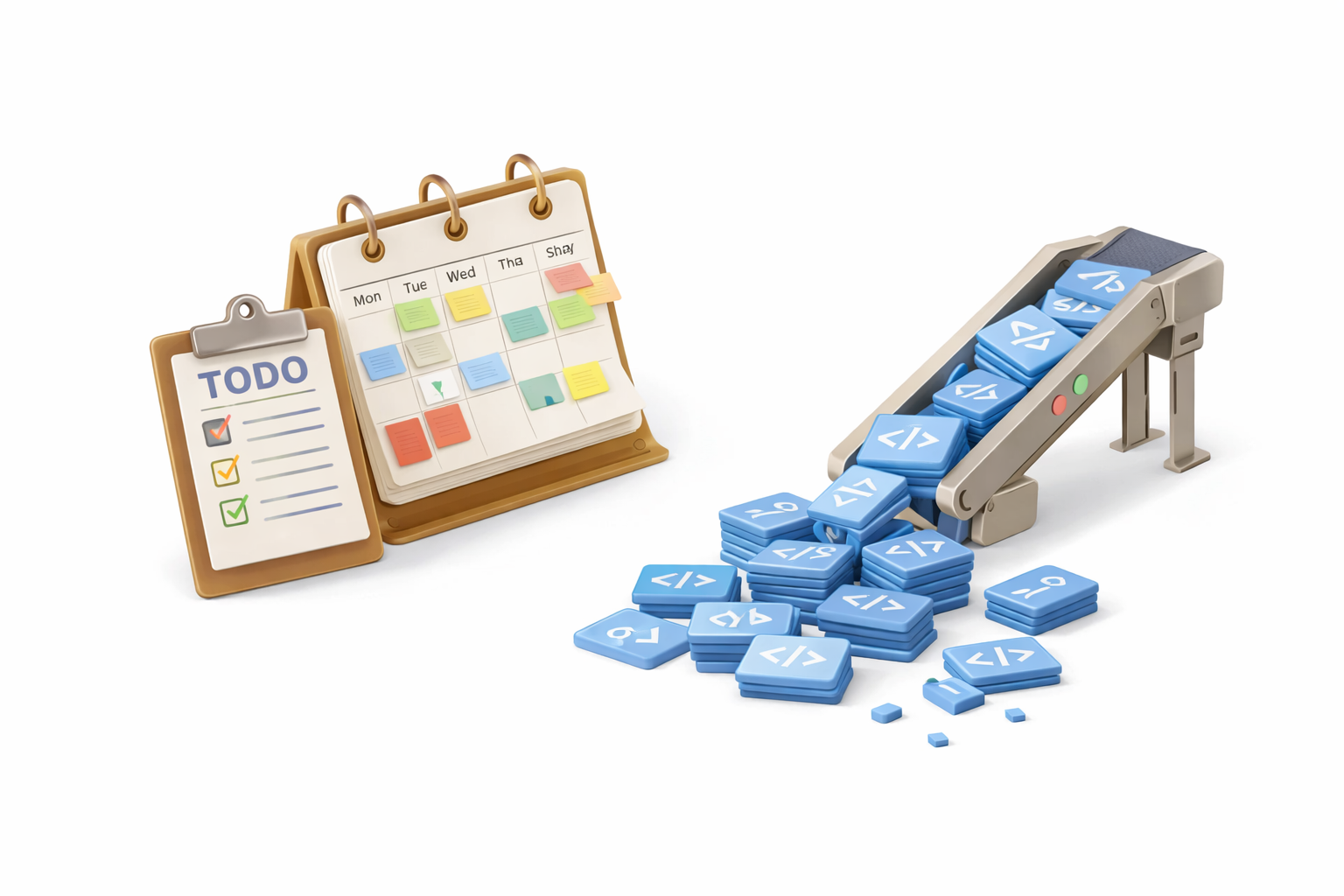
Nobody disputes work like Japanese support for internal users in Tokyo. They dispute whether it belongs in this quarter. In a planning system, that means the work waits behind whatever the quarter is officially about. In a background-task system, it just gets done.
The same pattern shows up everywhere else. Fill in instrumentation before the pager teaches you where the blind spots are. Do perf work before users complain, ship dashboards so users can see their own usage without filing a ticket, harden security without waiting for a calendar slot, and knock out UX delight like focusing the primary text box after input or paste.
Planning systems are bad at background tasks. The work is too small to look strategic, too cross-cutting to have a clean owner, and too easy to postpone because nothing is fully on fire yet.
If something is annoying, brittle, or obviously wrong, it is not “low priority.” It is a background task.
Once agents can work continuously, the usual rituals start looking like ways to keep known-good work waiting in line. You do not need a special season to tighten instrumentation, harden security, or knock out a pile of UX footguns. You need enough signal to tell whether the change worked and enough harness to keep the bad version from coming back.
Planning does not disappear. As of March 2026, agents still do not reliably:
- build a new product from zero.
- carry the hardest interface refactors.
- work well when the interfaces are still unknown and most of the problem is whitespace.
The truly scarce resource is still human time and attention. Spend it on bets and ambiguity, not on scheduling the known-good engineering that agents can clear in the background.